
Best Time to Visit Oman
Oman’s climate varies dramatically by region and season. Choosing the right time to visit ensures you can enjoy the country’s outdoor attractions comfortably.
Season breakdown:
| Season | Months | Temperature | Best For |
|---|---|---|---|
| Winter (Peak) | November – February | 18-28C | Sightseeing, desert camping, hiking |
| Spring | March – April | 22-33C | Beach, wadis, cultural events |
| Summer | May – September | 35-48C | Indoor activities, Salalah monsoon |
| Autumn | October | 25-35C | Shoulder season, good deals |
October to March is the prime tourist season. Daytime temperatures are pleasant for exploring outdoor attractions like the Wahiba Sands, Jebel Shams, and the Musandam Peninsula. Evenings can be cool, especially in the mountains.
Summer (May to September) brings extreme heat to most of Oman, with temperatures exceeding 45 degrees Celsius inland. However, the Dhofar region around Salalah experiences the Khareef (monsoon) season from June to September, transforming the landscape into a lush green paradise.
Before planning your trip, ensure you have the correct visa type for your planned duration of stay. The Oman eVisa processing time is typically 1-4 business days.
Oman Currency and Payments
The Omani Rial (OMR) is the official currency and one of the highest-valued currencies in the world.
Currency basics:
| Unit | Value |
|---|---|
| 1 Omani Rial (OMR) | ~2.60 USD |
| 1 OMR | ~2.40 EUR |
| 100 Baisa | 0.10 OMR |
Payment methods:
- Credit/debit cards: Widely accepted in cities, hotels, malls, and restaurants. Visa and Mastercard are the most common.
- Cash: Essential for souks (markets), small shops, taxis, and rural areas. Carry small denominations.
- ATMs: Available throughout Muscat and major towns. International cards are accepted at most ATMs.
- Mobile payments: Apple Pay and Samsung Pay are increasingly accepted in urban areas.
Money tips:
- Exchange currency at banks or authorized exchange offices (better rates than airports)
- Notify your bank before traveling to prevent card blocks
- Keep small bills for tips, taxis, and market shopping
- Bargaining is expected in souks but not in malls or established shops
Safety in Oman
Oman is consistently ranked as one of the safest countries in the Middle East and among the safest destinations globally for tourists.
Safety highlights:
- Extremely low crime rate, including petty crime
- Strong police presence and rapid emergency response
- Welcoming and hospitable local population
- Safe for solo female travelers with standard precautions
- Political stability within the region
Practical safety advice:
- Keep copies of your passport and eVisa separate from originals
- Stay hydrated, especially during summer months
- Respect local customs and dress codes
- Use registered taxis or ride-hailing apps (Mwasalat, OTaxi)
- Carry your driving license if renting a car
Emergency numbers:
| Service | Number |
|---|---|
| Police | 9999 |
| Ambulance | 9999 |
| Fire | 9999 |
| Tourist Police | 24564444 |
Dress Code and Cultural Etiquette
Oman is a Muslim country with traditional values, but it is relatively liberal compared to some neighboring states.
Dress guidelines:
- Men: Long trousers and sleeved shirts in public areas. Shorts are acceptable at beaches and resorts.
- Women: Shoulders and knees should be covered in public. No head covering required except when visiting mosques.
- Mosques: Women must cover their hair, arms, and legs. Men should wear long trousers.
- Beaches: Swimwear is acceptable at hotel beaches and private pools only.
Cultural etiquette:
- Remove shoes before entering mosques and homes
- Ask permission before photographing people, especially women
- Do not eat, drink, or smoke in public during Ramadan daylight hours
- Use your right hand for greetings and eating
- Alcohol is available only in licensed hotels and restaurants
- Public displays of affection should be minimal
Getting Around Oman
Transportation options in Oman range from rental cars to public buses, with each suited to different travel styles.
Rental cars: The most popular option for tourists. Roads are excellent, fuel is cheap (~0.20 OMR per liter), and driving gives you freedom to explore at your own pace. International driving permits are recommended alongside your home license.
Taxis: Available in cities. Agree on the fare before the ride or insist on the meter. Ride-hailing apps like OTaxi provide transparent pricing.
Buses: Mwasalat operates public buses in Muscat and between major cities. Service is affordable but limited in frequency and routes.
Domestic flights: Oman Air operates flights between Muscat and Salalah (the main domestic route). Useful for reaching Dhofar region quickly.
Ferries: National Ferries connect Muscat with the Musandam Peninsula and some coastal towns.
Top Attractions in Oman
Oman offers diverse attractions ranging from ancient forts to pristine natural landscapes.
Must-see destinations:
| Attraction | Location | Highlight |
|---|---|---|
| Sultan Qaboos Grand Mosque | Muscat | One of the world’s most beautiful mosques |
| Muttrah Souk | Muscat | Traditional market with frankincense and spices |
| Nizwa Fort | Nizwa | 17th-century fort with panoramic views |
| Wahiba Sands | Interior | Desert dunes for camping and dune bashing |
| Jebel Shams | Al Hajar Mountains | Oman’s highest peak, “Grand Canyon” |
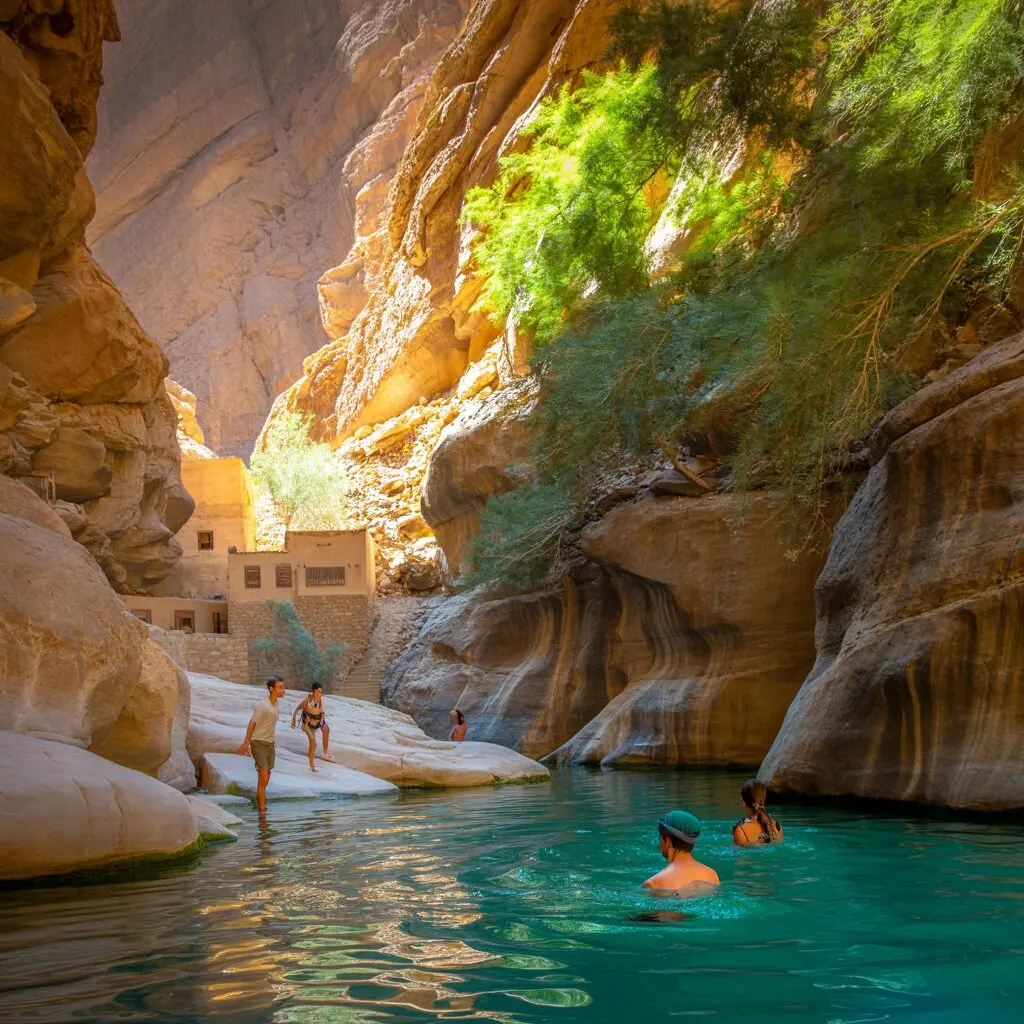
| Wadi Shab | Tiwi | Stunning canyon with turquoise pools |
| Royal Opera House | Muscat | World-class performances and architecture |
| Bahla Fort | Bahla | UNESCO World Heritage Site |
| Ras al-Jinz | Sur | Green turtle nesting beach |
| Salalah (Khareef) | Dhofar | Monsoon season transforms desert to green |
Food and Accommodation
Oman’s cuisine reflects its position at the crossroads of Arab, Indian, and East African cultures.
Traditional Omani dishes:
- Shuwa: Slow-roasted lamb cooked underground for up to 48 hours
- Mashuai: Whole roasted kingfish with lemon rice
- Halwa: Sweet gelatinous dessert with dates, nuts, and saffron
- Kahwa: Omani coffee flavored with cardamom, served with dates
Accommodation options:
| Type | Price Range (per night) | Best For |
|---|---|---|
| Budget hotels | 15-30 OMR | Backpackers, budget travelers |
| Mid-range hotels | 40-80 OMR | Families, couples |
| Luxury resorts | 100-300+ OMR | Premium experience |
| Desert camps | 30-100 OMR | Unique overnight experience |
| Camping (wild) | Free | Adventure travelers |
Oman has international hotel chains in Muscat and major cities, as well as unique boutique properties and traditional guesthouses in rural areas.
Frequently Asked Questions
Last updated: July 2026. Travel conditions and visa requirements may change. Verify at evisa.gov.om and omantourism.gov.om before traveling.
Practical Travel Checklist for Oman
Before your trip, make sure you have the following essentials covered:
Documents: Valid passport (6+ months validity), approved Oman eVisa printout, travel insurance documents, hotel booking confirmations, and return flight tickets.
Health: Bring any prescription medications in their original packaging with a doctor’s note. The sun in Oman is intense – pack high-SPF sunscreen, a wide-brimmed hat, and sunglasses. Stay hydrated by drinking at least 2-3 liters of water daily.
Connectivity: Buy a local SIM card at the airport (Omantel or Ooredoo) for affordable data. Wi-Fi is available in most hotels and cafes in Muscat. International roaming can be expensive.
Money: Carry some Omani Rials in cash for souks, taxis, and small shops. Credit cards are accepted at larger establishments. ATMs are widely available in urban areas.