
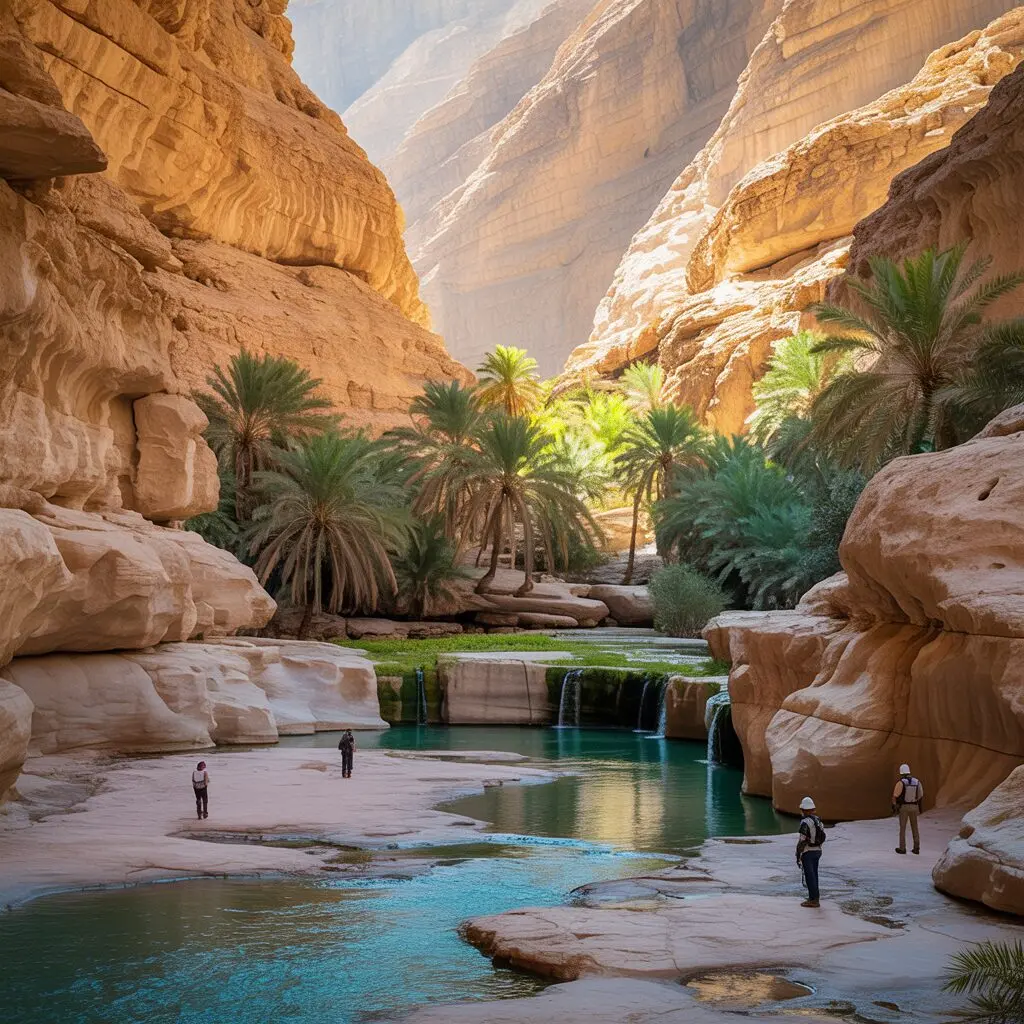
Oman’s must-see attractions range from ancient forts and stunning mosques to dramatic wadis, desert dunes, and pristine coastline – this guide covers the top places to visit with practical tips for planning your itinerary.
Top Attractions in Oman
Oman offers an extraordinary range of attractions that combine natural wonders, ancient history, and modern culture. Unlike many Gulf destinations, Oman has preserved its heritage while developing world-class tourist infrastructure.
Overview of Oman’s best attractions:
| Attraction | Location | Type | Time Needed |
|---|---|---|---|
| Sultan Qaboos Grand Mosque | Muscat | Cultural/Religious | 1-2 hours |
| Muttrah Souk | Muscat | Shopping/Cultural | 2-3 hours |
| Nizwa Fort | Nizwa | Historical | 1-2 hours |
| Wahiba Sands | Interior | Nature/Adventure | 1-2 days |
| Jebel Shams | Al Hajar Mountains | Nature/Hiking | 1-2 days |
| Wadi Shab | Tiwi | Nature/Swimming | Half day |
| Royal Opera House | Muscat | Cultural | 2-3 hours |
| Bahla Fort | Bahla | Historical/UNESCO | 1-2 hours |
| Ras al-Jinz | Sur | Nature/Wildlife | Evening/Morning |
| Salalah (Khareef) | Dhofar | Nature/Cultural | 2-3 days |
Before exploring these sites, ensure your Oman eVisa is approved. Check the best time to visit Oman to plan your trip around optimal weather conditions.
Sultan Qaboos Grand Mosque
The Sultan Qaboos Grand Mosque in Muscat is Oman’s most iconic landmark and one of the most beautiful mosques in the world. Opened in 2001, it showcases stunning Islamic architecture with a blend of Omani, Persian, and Indian design elements.
Highlights:
– Main prayer hall carpet weighs 21 tons and took 600 women four years to weave – it was the largest hand-woven carpet in the world at the time of installation
– Crystal chandelier in the main prayer hall is 14 meters tall and contains 600,000 Swarovski crystals
– Capacity for 20,000 worshippers in the entire mosque complex
– The mosque complex includes a library with over 20,000 books on Islamic studies
Visitor information:
– Open to non-Muslim visitors Saturday to Thursday, 8:00-11:00 AM
– Closed on Fridays (the holy day) and during prayer times
– Free entry
– Dress code is strictly enforced: women must cover hair, arms, and legs; men must wear long trousers
– Abayas and scarves are available for borrowing at the entrance
– Allow 1-2 hours for a thorough visit
Wadis – Oman’s Hidden Valleys
Oman’s wadis (dry river valleys) are among the country’s most spectacular natural attractions, featuring turquoise pools, dramatic canyon walls, and lush vegetation.
Top wadis to visit:
– Wadi Shab – The most famous wadi, featuring a hike through a canyon to turquoise pools and a hidden waterfall inside a cave. Accessible by boat across the river (1 OMR) followed by a 45-minute hike. Located near Tiwi, about 2 hours from Muscat.
– Wadi Bani Khalid – One of the most accessible wadis with permanent pools perfect for swimming. Features caves to explore and picnic facilities. Located about 2.5 hours from Muscat.
– Wadi Tiwi – A scenic drive through date plantations and villages with natural swimming pools. Less crowded than Wadi Shab and equally beautiful.
– Wadi Darbat – Located in the Dhofar region near Salalah, this wadi features waterfalls during the Khareef monsoon season and is a popular spot for picnics and wildlife.
Wadi safety tips:
– Check weather forecasts before visiting – flash floods can occur suddenly
– Wear sturdy water shoes or sandals with good grip
– Bring water, snacks, and sun protection
– Do not swim alone or in areas with strong currents
– Mobile phone reception may be limited in wadis
Historical Forts and Castles
Oman has over 500 forts and castles, making it one of the most fortified countries in the world. These structures span centuries of Omani history and architectural achievement.
Must-visit forts:
– Nizwa Fort – Built in the 17th century, this massive circular tower fort dominates the Nizwa skyline. Climb to the top for panoramic views of the date palm oasis and mountains. Adjacent to the vibrant Nizwa Souk, famous for its Friday cattle market.
– Bahla Fort – A UNESCO World Heritage Site and one of the oldest forts in Oman, dating back to the 13th century. Underwent extensive restoration and represents the region’s pre-Islamic and Islamic heritage.
– Jabrin Castle – A 17th-century castle known for its beautiful interior decorations, painted ceilings, and intricate woodwork. Considered the finest example of Omani architecture.
– Nakhal Fort – Perched on a rocky promontory with dramatic mountain backdrop. Features a natural spring within its walls.
– Sur Fort – Overlooking the sea in the coastal city of Sur, known for its traditional dhow-building heritage.
Practical tips for visiting forts:
– Entry fees range from 0.5 to 5 OMR per person
– Most forts are open Saturday to Wednesday 9:00-16:00; Thursday 9:00-14:00
– Hire a guide at larger forts for historical context
– Visit early morning or late afternoon to avoid the midday heat
Desert Experiences – Wahiba Sands
The Wahiba Sands (also called Sharqiya Sands) is a vast desert stretching across central Oman, offering some of the region’s most authentic desert experiences.
What to do in the Wahiba Sands:
– Dune bashing – 4WD excursions over towering sand dunes with experienced drivers
– Desert camping – Stay in Bedouin-style camps ranging from basic to luxury
– Camel rides – Traditional desert transport at sunrise or sunset
– Sandboarding – Slide down the dunes on a board
– Stargazing – The clear desert sky offers extraordinary views of the Milky Way
– Visit Bedouin communities – Learn about traditional desert life and hospitality
Practical information:
– The Wahiba Sands are approximately 2.5 hours drive from Muscat
– A 4WD vehicle is essential – regular cars cannot handle the sand
– Guided tours from Muscat cost approximately 50-150 OMR per person including transport, activities, and meals
– Overnight camping ranges from 30-100 OMR depending on the level of comfort
– The best time to visit is from October to March when temperatures are pleasant
Coastal Attractions and Marine Life
Oman’s 3,165-kilometer coastline offers pristine beaches, world-class diving, and unique marine wildlife encounters.
Top coastal attractions:
– Ras al-Jinz Turtle Reserve – One of the most important green turtle nesting beaches in the world. Guided night tours (arranged through the reserve) let you witness turtles laying eggs. Located near Sur, about 2.5 hours from Muscat.
– Daymaniyat Islands – A nature reserve off the coast of Muscat offering excellent diving and snorkeling. Accessible by boat tour (30-50 OMR per person). Rich marine life including reef sharks, sea turtles, and colorful fish.
– Bandar Khayran – A sheltered bay near Muscat ideal for kayaking, snorkeling, and boat trips.
– Musandam Peninsula – Known as the “Norway of Arabia” for its dramatic fjord-like coastline. Dhow cruises through the khors (inlets) are a highlight. Accessible by road from the UAE or by ferry from Muscat.
– Sur – A historic port city known for traditional dhow building, with a charming corniche and the nearby Ras al-Jinz turtle reserve.
Beach etiquette:
– Swimwear is appropriate at hotel beaches and resort pools only
– Public beaches expect more modest attire
– Respect any wildlife you encounter, especially nesting turtles
– Take all trash with you and leave beaches clean
For practical arrival logistics and transport to coastal destinations, see our Oman airport guide.
Mountain Adventures
The Al Hajar Mountains offer dramatic landscapes, hiking trails, and cooler temperatures.
Jebel Shams:
– Oman’s highest peak at 3,009 meters (9,872 feet)
– Known as the “Grand Canyon of Arabia” for its spectacular gorge
– The Balcony Walk (W6 trail) is a popular moderate hike along the canyon rim (approximately 4-5 hours round trip)
– Camping at the summit is possible with proper gear
– Temperatures can drop below freezing at night in winter
Jebel Akhdar:
– The “Green Mountain” is famous for its terraced farms growing pomegranates, apricots, and roses
– The village of Saiq sits at approximately 2,000 meters elevation
– Rose water distillation (March-April) is a unique cultural experience
– Luxury accommodation is available at the Anantara Al Jabal Al Akhdar Resort
Jebel Akhdar access: A 4WD is mandatory for the mountain road. Security checkpoints verify vehicle type before allowing access.
Frequently Asked Questions
What are the must-see attractions in Muscat?
The essential Muscat attractions are the Sultan Qaboos Grand Mosque (visit Saturday-Thursday morning), Muttrah Souk (traditional market), the Royal Opera House (world-class performances and architecture), and the Bait Al Zubair Museum (Omani heritage). The Corniche area offers beautiful waterfront walks. Allow at least 2 full days for Muscat.
How many days do I need to see Oman’s main attractions?
A minimum of 7-10 days is recommended to see Oman’s main attractions comfortably. A suggested itinerary: 2 days in Muscat, 1-2 days for Nizwa and nearby forts, 1-2 days in the Wahiba Sands, 1 day for wadis (Shab and Bani Khalid), 1 day for the mountains (Jebel Shams or Akhdar), and 2-3 days for Salalah or Musandam. Shorter 5-day trips can focus on Muscat, Nizwa, and the desert.
Are Oman’s attractions expensive to visit?
Many of Oman’s top natural attractions are free or very affordable. Wadis, beaches, mountain viewpoints, and the Sultan Qaboos Grand Mosque have no entry fee. Fort entry fees range from 0.5 to 5 OMR. Desert tours cost 50-150 OMR including transport and activities. Diving trips are 30-60 OMR. Compared to Dubai, Oman offers much better value for natural and cultural attractions.
Can I visit Oman’s wadis on my own?
Yes, most wadis can be visited independently with a rental car (ideally 4WD for some access roads). Wadi Bani Khalid is the most accessible with a paved road and parking. Wadi Shab requires a short boat ride across the river. Always check weather conditions before visiting wadis as flash floods are a genuine danger. Inform someone of your plans and carry water and sun protection.
Is it worth visiting Salalah?
Absolutely, especially during the Khareef monsoon season (June-September) when the region transforms into a lush green landscape with waterfalls, mist-covered mountains, and cool temperatures. Salalah offers unique attractions including the Al Baleed Archaeological Park (UNESCO), frankincense trees, pristine beaches, and the Sultan Qaboos Mosque. The dry season (October-May) also has its charm with beautiful beaches and historical sites.
When is the best time to see turtles at Ras al-Jinz?
Green turtles nest at Ras al-Jinz year-round, but the peak nesting season runs from July to October. Guided night tours operate daily, departing around 9 PM from the reserve visitor center. The experience of watching a 150-kg turtle lay eggs on the beach is unforgettable. Book tours in advance through the Ras al-Jinz Turtle Reserve, especially during peak season.
Can I visit the Musandam Peninsula from Muscat?
Yes, the Musandam Peninsula is accessible from Muscat by road (approximately 5-6 hours via the UAE) or by ferry. Dhow cruises through the dramatic fjord-like khors are the highlight, often including snorkeling and dolphin watching. A popular option is a day trip or overnight stay in Khasab, the main town. You can also fly from Muscat to Khasab (about 1 hour). Check visa requirements if transiting through the UAE.
Do I need a guide for Oman’s forts?
Guides are not required but are recommended for larger forts like Nizwa, Bahla, and Jabrin. Guides provide historical context and architectural details that bring the sites to life. Some forts have information panels in English, but a knowledgeable guide enhances the experience significantly. Guided tours typically cost 5-10 OMR and can be arranged at the fort entrance or through your hotel.
Last updated: July 2026. Opening hours and entry fees may change. Verify current information and ensure your Oman eVisa is approved before traveling.