
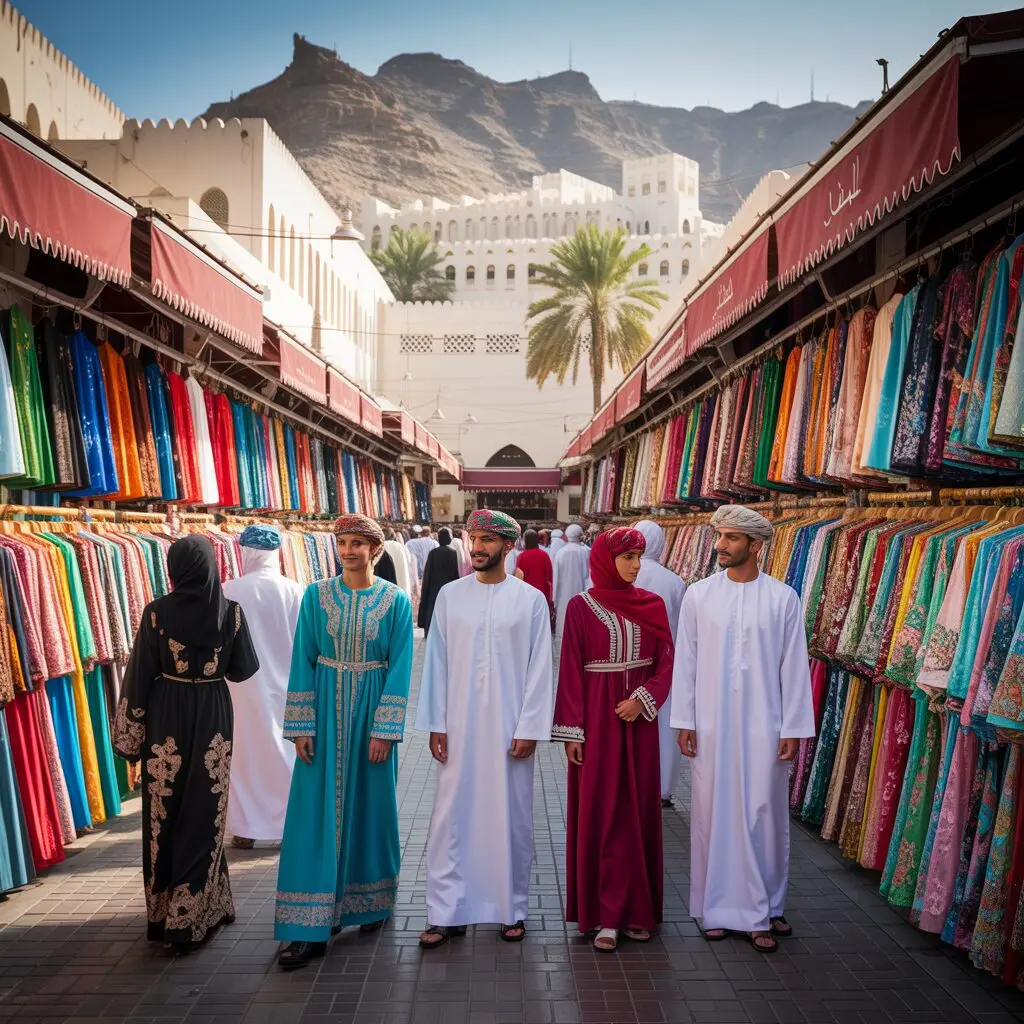
This Oman dress code guide explains what tourists should wear at beaches, mosques, souks, and formal settings – Oman is relatively liberal for the region, but dressing modestly shows cultural respect and helps you avoid unwanted attention.
Oman Dress Code Overview
Oman is a Muslim country with traditional values, but it is notably more relaxed about dress codes than some neighboring Gulf states. That said, dressing modestly is a sign of respect for local culture and helps visitors avoid uncomfortable situations.
General principles:
– Modesty is the key word – cover shoulders and knees in public areas
– Context matters – dress codes vary between beaches, malls, souks, mosques, and business settings
– No strict enforcement for tourists, but local police can issue warnings for extremely inappropriate clothing
– Climate consideration – lightweight, breathable fabrics keep you comfortable while maintaining modesty
Oman does not require visitors to wear traditional clothing. However, understanding and respecting local expectations will enhance your experience and interactions with locals. Before traveling, make sure your Oman eVisa is approved and review the best time to visit for weather-appropriate packing.
Dress Code for Women in Oman
Women travelers have more specific dress code considerations in Oman, but the rules are straightforward and not overly restrictive.
Public areas (malls, souks, restaurants, streets):
– Shoulders should be covered – avoid tank tops and spaghetti straps
– Knees should be covered – skirts and shorts should reach at least knee length
– Cleavage should not be visible
– Tight or revealing clothing is discouraged
– No head covering is required in public (only in mosques)
Recommended clothing for women:
– Loose-fitting blouses or t-shirts with sleeves
– Maxi skirts, long trousers, or capri pants
– Lightweight dresses that cover shoulders and knees
– A light scarf or shawl (useful for mosque visits and sun protection)
– Comfortable, breathable fabrics like cotton and linen
At the beach or pool:
– Swimwear is acceptable at hotel beaches and private pools only
– Cover up when leaving the beach area
– Public beaches generally expect more modest swimwear (one-piece or tankini rather than bikini)
– Wear a cover-up or t-shirt and shorts when walking to and from the beach
At mosques:
– Women must cover their hair, arms, and legs completely
– Wear loose-fitting clothing that does not reveal the body shape
– Most major mosques (like Sultan Qaboos Grand Mosque) provide abayas for female visitors
– Remove shoes before entering
Dress Code for Men in Oman
Men have a simpler dress code in Oman but should still follow basic guidelines.
Public areas:
– Long trousers are expected in malls, souks, restaurants, and business settings
– Sleeved shirts are preferred in public (t-shirts are acceptable)
– Shorts are acceptable at beaches, resorts, sports facilities, and some casual tourist areas
– Sleeveless shirts should be limited to beach and sports contexts
Recommended clothing for men:
– Lightweight long trousers (cotton or linen)
– Short-sleeved or long-sleeved shirts and polo shirts
– Comfortable walking shoes or sandals
– A light jacket or sweater for air-conditioned spaces
At mosques:
– Men should wear long trousers (shorts are not permitted)
– Short-sleeved shirts are acceptable
– Remove shoes before entering
– Avoid wearing shorts even in the mosque courtyard
Dress Code by Setting
Different situations in Oman call for different dress standards.
Shopping malls and restaurants:
– Smart casual is the standard
– Men: long trousers, collared shirt or clean t-shirt
– Women: covered shoulders and knees, modest neckline
– Avoid flip-flops and overly casual beachwear
Souks (traditional markets):
– Modest clothing is especially important in traditional markets
– The souk environment is conservative – dress more modestly than in malls
– Comfortable closed-toe shoes are recommended (ground can be uneven)
– Avoid displaying expensive jewelry or accessories
Desert and outdoor activities:
– Lightweight, loose-fitting long sleeves and trousers protect against sun and sand
– A wide-brimmed hat or head covering is essential
– Closed-toe shoes or hiking boots for wadis and rocky terrain
– A light scarf protects against sand and sun
– Layer for desert evenings when temperatures drop significantly
Business settings:
– Men: suit and tie or smart business attire
– Women: business suit, covered shoulders and knees, closed-toe shoes
– Omani men often wear the traditional dishdasha (white robe) with kumma (cap) or mussar (turban)
What NOT to Wear in Oman
Certain clothing choices can attract unwanted attention or cause offense in Oman.
Avoid wearing:
– Offensive graphics or slogans on clothing (political, religious, or profane)
– Military-style clothing or camouflage patterns (can cause confusion)
– Extremely tight or revealing clothing in any public setting
– Transparent clothing that reveals undergarments
– Bikinis or swimwear outside of hotel beaches and pool areas
– No shirt (men) outside of beach and pool areas
Cultural sensitivity:
– Avoid clothing with Arabic text unless you understand the meaning
– Religious symbols from other faiths may attract attention but are not prohibited
– During Ramadan, be extra mindful of modest dress as a sign of respect
Packing List for Oman
Here is a practical packing checklist tailored to Oman’s dress code and climate.
Essential items:
| Category | Items |
|---|---|
| Tops | T-shirts with sleeves, lightweight blouses, polo shirts |
| Bottoms | Long trousers, maxi skirts, capri pants, knee-length shorts |
| Beach | Swimwear (for hotel pools/beaches), cover-up, rash guard |
| Modesty | Light scarf or shawl, cardigan for air-conditioned spaces |
| Footwear | Comfortable walking shoes, sandals, flip-flops for beach |
| Sun protection | Wide-brimmed hat, sunglasses, high-SPF sunscreen |
| Extras | Light jacket (winter evenings, mountain areas), modest sleepwear for hotel corridors |
Seasonal adjustments:
– Winter (November – February): Add a warm layer for evenings and mountain visits
– Summer (May – September): Focus on ultra-light, breathable fabrics; sun protection is critical
– Khareef season in Salalah: Bring a light rain jacket and warmer layers
For more on what to pack based on seasonal conditions, see our Oman best time to visit guide.
Cultural Etiquette Beyond Dress
Dress code is part of broader cultural etiquette in Oman. These additional tips complement appropriate clothing.
Social etiquette:
– Greetings: Men shake hands with men. Wait for an Omani woman to extend her hand first – some prefer not to shake hands with men for religious reasons
– Photography: Always ask permission before photographing people, especially women
– Right hand: Use your right hand for greetings, eating, and passing items
– Public displays of affection: Keep them minimal – handholding is generally fine, but kissing and hugging in public should be avoided
– Alcohol: Available only in licensed hotels and restaurants. Do not appear intoxicated in public
During Ramadan:
– Dress even more modestly than usual
– Do not eat, drink, or smoke in public during daylight hours
– Be patient with reduced business hours and traffic congestion before sunset
For comprehensive safety and etiquette advice, check our Oman safety tips guide.
Frequently Asked Questions
Do I need to wear a headscarf in Oman?
No, women are not required to wear a headscarf in public in Oman. The only time a head covering is required is when visiting mosques. Many major mosques like the Sultan Qaboos Grand Mosque in Muscat provide abayas and headscarves for female visitors. Carrying a light scarf is useful for spontaneous mosque visits and as sun protection.
Can I wear shorts in Oman?
Men can wear knee-length shorts at beaches, resorts, sports facilities, and casual tourist areas. In malls, souks, restaurants, and public spaces, long trousers are expected. Women should opt for knee-length or longer shorts, though long trousers or maxi skirts are more appropriate for most public settings. When in doubt, choose longer clothing.
Can I wear a bikini on the beach in Oman?
Swimwear including bikinis is acceptable at hotel beaches, resort pools, and private beach clubs. However, on public beaches, more modest swimwear is expected – a one-piece or tankini with a cover-up is more appropriate. Always wear a cover-up when leaving the beach area and walking through public spaces.
What should I wear to the Sultan Qaboos Grand Mosque?
The Sultan Qaboos Grand Mosque has a strict dress code. Women must cover their hair, arms, legs, and ankles – the mosque provides abayas and scarves if needed. Men must wear long trousers (no shorts) and sleeved shirts. Both genders must remove shoes before entering. The mosque is one of the most visited sites in Oman, so dressing appropriately is essential for entry.
Is there a different dress code during Ramadan?
While the official dress code does not change during Ramadan, visitors should be extra mindful of dressing modestly as a sign of respect during this holy month. Avoid particularly revealing or casual clothing. Both men and women should err on the side of conservative dress, especially when visiting public spaces, souks, and government buildings.
Can I wear traditional Omani clothing as a tourist?
Wearing traditional Omani clothing as a tourist is generally not recommended unless you are attending a cultural event or have been invited to do so by Omani hosts. The dishdasha (men’s white robe) and abaya (women’s black cloak) are culturally significant garments. Wearing them casually could be seen as inappropriate or culturally insensitive. If you want to try traditional clothing, do so at a cultural event or with guidance from locals.
What shoes should I wear in Oman?
Comfortable walking shoes or sandals are ideal for most situations in Oman. Closed-toe shoes are recommended for wadis, mountain hiking, and exploring souks with uneven ground. Flip-flops are fine for beaches and hotel areas. You will frequently need to remove shoes when entering mosques and homes, so easy-to-remove footwear is practical. In desert areas, closed-toe shoes protect against hot sand and sharp stones.
Do dress codes vary between Muscat and rural areas?
Yes, dress codes tend to be more relaxed in Muscat, especially in malls, hotels, and tourist areas. In rural areas and smaller towns, locals are more conservative, and visitors should dress more modestly. In the southern Dhofar region and the Musandam Peninsula, the same general rules apply but with slightly more flexibility in tourist resort areas. When visiting villages or traditional communities, err on the side of conservative dress.
Last updated: July 2026. Dress code expectations may vary by location and occasion. Respect local customs and verify your Oman eVisa before traveling.